
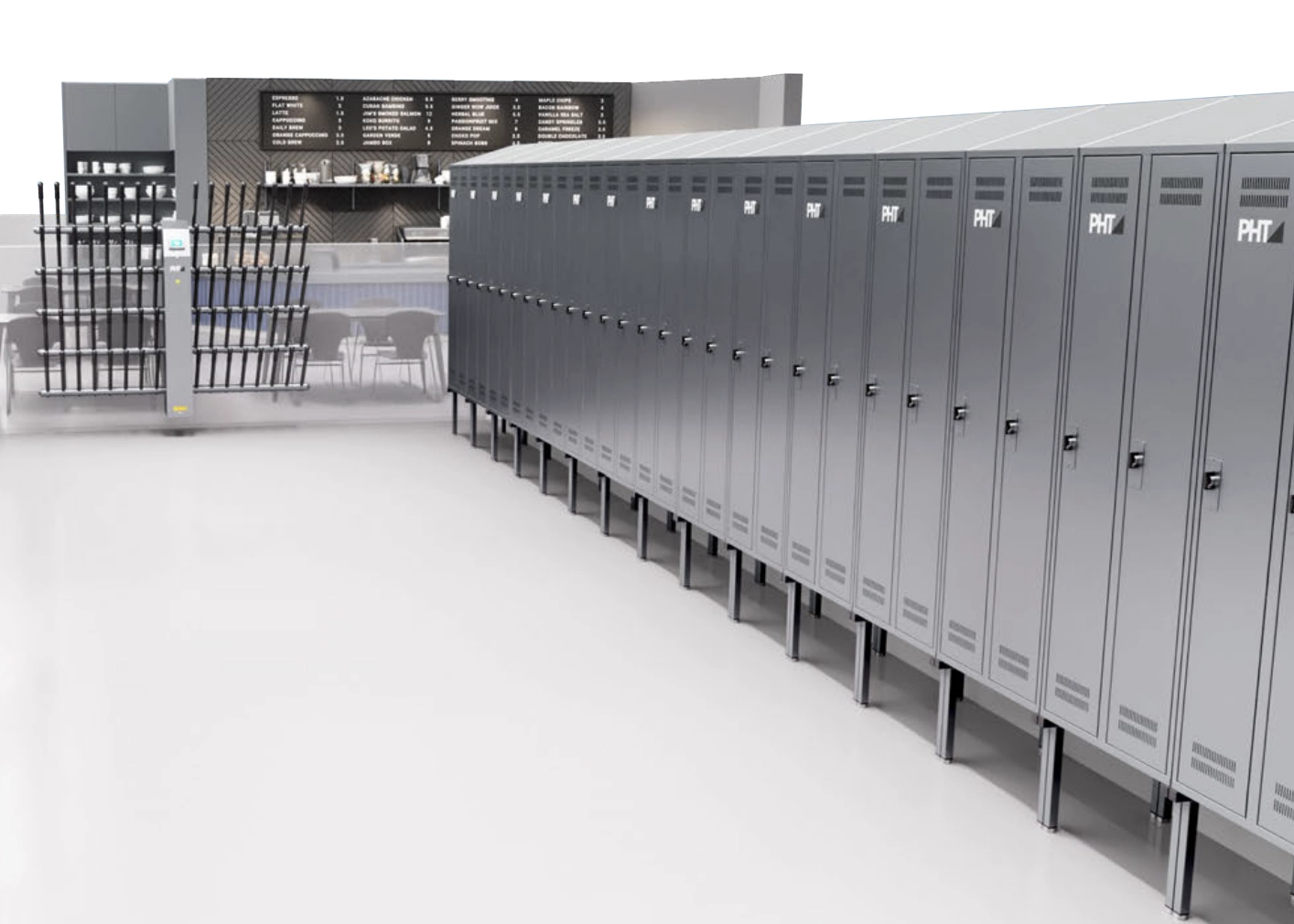
Changing rooms Catering: Hygiene standards and modern solutions for hotels, restaurants, and commercial kitchens
In the catering industry, hygiene begins even before entering the kitchen area – specifically, in the changing room. Changing rooms in gastronomy are far more than simple spaces for changing clothes. They form a critical hygiene barrier between the outside world and sensitive food areas, making them an indispensable part of any HACCP-compliant hygiene concept.
What are the hygiene requirements for changing rooms in the catering industry?
Changing rooms in gastronomic establishments are subject to strict hygiene regulations, which arise from various legal bases. Food hygiene regulations and HACCP guidelines require clearly defined areas for changing clothes, designed to prevent contamination of food by street clothes, dirt, or pathogens.
The central principle is the spatial and functional separation between dirty and clean areas. Dirty areas are zones where street clothes are worn and removed, while clean areas are designated for putting on work clothes. This separation prevents cross-contamination and forms the first line of defense against microbiological hazards in food areas.
Modern changing rooms are well-ventilated and prevent moisture accumulation, which would create an ideal breeding ground for mold and bacteria. The choice of materials for floors, walls, and furnishings plays a crucial role: smooth, washable surfaces made of germ-inhibiting materials are the standard here.
The Dirty-Clean Principle: The Basis of Hygienic Changing Rooms
The so-called dirty-clean principle is the proven concept for hygienic changing rooms in the catering industry. The dirty area refers to the zone where employees arrive in street clothes, take them off, and store them in a locker. The clean area is the zone where only clean work clothes are put on.
The physical separation of these two areas can be achieved through various structural measures. Ideally, a barrier such as a bench or a pass-through system exists to prevent accidental mixing. In larger establishments, separate rooms are often set up, through which employees must pass in a defined direction to exclude contamination.
It is particularly important that employees perform hand hygiene in the transition area between both zones. Modern hygiene solutions support this process through integrated handwashing and disinfection stations installed directly in the changing area. This combination of spatial separation and targeted hand hygiene significantly minimizes the risk of contamination.
Legal Basis and Compliance for Changing Rooms in the Catering Industry
The design and equipment of changing rooms in gastronomic establishments are not a matter of personal preference but are legally regulated. Various regulations and standards define clear requirements. HACCP concepts must consider changing rooms as a critical control point, as the risk of cross-contamination is particularly high here. The Workplace Ordinance (ArbStättV) also regulates the minimum requirements for changing rooms from an occupational safety perspective, including size, lighting, and ventilation.
During official inspections, changing rooms are among the regularly audited areas. Deficiencies can lead to requirements, fines, or, in the worst case, temporary business closure. Professional planning and equipment are therefore essential not only for hygienic reasons but also for legal and economic ones.
Hygienic Equipment: What Belongs in a Professional Changing Room?
A professional changing room in the catering industry needs more than just lockers and benches. The right equipment is crucial for maintaining hygienic standards and ensuring employee acceptance.
Basic Equipment According to Hygienic Criteria
Separate locker systems for street clothes and work clothes form the basis. Ideally, these are stainless steel lockers that are easy to clean and do not retain moisture. Ventilation slots prevent mold formation in the lockers. Benches between the dirty and clean areas form a physical barrier. Touchless waste bins reduce additional sources of contamination.
Hygiene Stations for Optimal Personal Hygiene
The integration of modern hygiene stations directly in the changing area is state-of-the-art today. PHT’s modular hygiene stations offer suitable solutions for hand disinfection directly in the transition area between the dirty and clean areas. Sensor-controlled operation eliminates touchpoints that could serve as sources of contamination.
Access Control Systems for Maximum Security
For particularly hygiene-sensitive areas in the catering industry, PHT’s access controls are a secure solution. The systems, made entirely of stainless steel, ensure that employees cannot bypass hand hygiene. Motorized turnstiles prevent unauthorized passage. These access control systems are particularly suitable for establishments that must meet the highest hygiene requirements, such as hospital kitchens, large-scale kitchens, or communal catering.
Hygienic Design in Catering Changing Rooms
Hygienic design is not just a recommendation, but an absolute necessity for every professional catering establishment. It is comparable to a drop of ink in a glass of crystal-clear water: without well-thought-out hygiene solutions, even the smallest contaminations can have significant consequences.
Smooth, easy-to-clean surfaces are standard. Avoiding depressions, elevations, or notches is a top priority. The use of germ-inhibiting, rust-free materials like stainless steel is not only visually appealing but functionally necessary.
Particularly important is the avoidance of hard-to-reach or inaccessible spaces, referred to in technical jargon as dead spaces or stagnant zones. Such areas can become breeding grounds for microorganisms, which could later enter kitchens and production areas via employees and contaminate food there. Rounded edges and corners, as well as self-draining constructions, are part of the concept.
Special Requirements in Various Catering Areas
The requirements for changing rooms vary considerably depending on the type of gastronomic establishment:
In communal catering, such as canteens, hospital kitchens, or nursing homes, the strictest standards apply, as particularly vulnerable groups of people are served here. Separate changing rooms are often required for different activity areas.
Restaurants and hotels require practical solutions that reconcile high hygienic standards with available space. Here, compact but functional changing room concepts are needed that implement the dirty-clean principle even in limited space. Mobile partitions or clearly marked areas can help here.
In confectioneries, changing rooms must also consider the requirements for dust-intensive work areas. Separate areas for flour-dust-exposed clothing prevent allergens from being carried into other operational areas. Special dust extraction may be required here.
Catering companies face particular challenges, as employees often move between different locations. Here, flexible changing solutions with particularly strict hygiene measures are required.
Economic Aspects: Investment in Professional Changing Rooms
Setting up professional changing rooms according to hygienic standards initially requires an investment, but this pays off many times over in the medium and long term. Reduced contamination risks minimize the danger of costly product recalls or production downtimes. A single food scandal can financially ruin a business and permanently damage its image. Avoiding fines during official inspections is another economic factor.
The efficiency of workflows is increased by well-planned changing rooms. Short distances, clear structures, and sufficient capacities prevent bottlenecks during shift changes. The time employees need to change is minimized, while hygienic quality simultaneously increases. These efficiency gains add up over the year to noticeable cost savings.
Planning and Implementation: How to Achieve a Hygienic Changing Room
The planning of a hygienic changing room begins with a precise needs analysis. How many employees use the changing room simultaneously? What shift systems are in place? What specific hygienic requirements does the type of gastronomic establishment demand? These questions determine the size, equipment, and technical requirements. The spatial arrangement must support logical workflows.
The PHT Group offers comprehensive consulting from initial planning to successful implementation. Individual requirements are taken into account, and tailor-made solutions are developed that meet both hygienic standards and are economically viable.
PHT Group: Your Partner for Hygienic Changing Room Solutions
The PHT Group is your competent partner for comprehensive hygiene solutions in the catering industry. Our products have been specially developed for the demanding requirements of hygiene-sensitive areas and meet the highest hygiene standards.
From modular hygiene stations to tamper-proof access control systems and professional cleaning solutions – we offer you the complete spectrum of modern hygiene technology from a single source. Our products are characterized by hygienic design, durable construction, and intuitive operation. Our proven changing room and hygiene equipment are already in use in numerous gastronomic establishments and have proven their worth many times over in practice.
Arrange a consultation appointment now and discover professional changing room solutions!
Contact us now for an individual consultation and find out how our hygiene solutions can sustainably improve the safety and efficiency of your operation. Together, we will develop the optimal hygiene concept – whether for a restaurant, large-scale kitchen, hotel, bakery, or catering company.